
Aromatherapy for Fall to Welcome the Crisp Season

Fall has a way of making the home feel more alive. Windows crack open to cooler air. Sweaters come out of storage. The kitchen starts to smell like cinnamon, roasted apples, and soup on the stove. Aromatherapy fits naturally into that seasonal shift because scent can make small routines feel grounded, warm, and intentional.
The best fall blends do more than mimic pumpkin spice. They can brighten a gray morning, soften the edge of a busy evening, or make a quiet room feel cozy without feeling heavy. With a few essential oils, a safe diffuser routine, and some simple scent pairings, you can bring the crisp season indoors in a way that feels fresh, welcoming, and personal.
This guide covers practical ways to use aromatherapy for fall, including scent families, diffuser blends, room-by-room ideas, and safety tips to keep the season pleasant for everyone at home.

Fall scents work best when they feel layered
A good fall scent has contrast. If every note is sweet, the room can start to feel syrupy. If every note is spicy, it can feel sharp. The most inviting blends usually balance three types of aromas.
Warm notes give the season its cozy feel. Think cinnamon, clove, ginger, cardamom, nutmeg, and vanilla-like aromas. These are strong oils, so a little goes a long way.
Fresh notes keep blends from feeling too thick. Orange, lemon, bergamot, grapefruit, fir needle, pine, eucalyptus, and rosemary can make a fall blend feel crisp instead of heavy.
Grounding notes add depth. Cedarwood, frankincense, patchouli, vetiver, and sandalwood-inspired aromas create a calm base, especially for evenings.
A simple way to build a fall blend is to use this ratio:
2 parts fresh
Orange, bergamot, fir, rosemary
1 part warm
Cinnamon, clove, ginger, cardamom
1 part grounding
Cedarwood, frankincense, vetiver
This gives the blend shape. The fresh note reaches you first, the warm spice fills the middle, and the grounding oil lingers after the diffuser stops.
If you are new to essential oils, start with familiar scents. Sweet orange, cedarwood, frankincense, ginger, and fir are easy to use and blend well with many oils. Cinnamon bark, clove, and oregano-type oils can be intense and more irritating, so use them sparingly and follow product instructions.
Aromatherapy is personal. A scent that feels cozy to one person may feel too strong to another. Start light, then adjust. Your home should smell welcoming when you walk in, not overwhelming before you reach the door.
Start with fall diffuser blends that fit the mood
Diffusing essential oils is one of the easiest ways to scent a room. The key is restraint. Most spaces only need a few drops total, and many diffusers work well in short sessions. Always follow your diffuser’s manual, especially for water levels and recommended oil amounts.
Here are fall blends designed for common seasonal moments. Use them as starting points and adjust based on room size, diffuser type, and scent preference.
Crisp morning blend
This blend feels bright and clean, like opening the windows on a cool morning.
3 drops sweet orange
2 drops fir needle or pine
1 drop rosemary
Use it while making breakfast, tidying the kitchen, or getting ready for the day. The citrus keeps it cheerful, while the evergreen note gives it that outdoor fall air feeling.
Cozy reading blend
This is warm, soft, and woodsy without being too sweet.
3 drops cedarwood
2 drops bergamot
1 drop ginger
Try it in a living room or reading corner. Ginger adds gentle spice, cedarwood creates depth, and bergamot keeps the blend from becoming too heavy.
Apple orchard blend
This blend has the feel of baked fruit and cool air, though it does not require an apple-scented oil.
3 drops sweet orange
2 drops cinnamon leaf
1 drop clove bud
Cinnamon and clove are powerful, so keep this blend light. If it feels too spicy, add more orange next time or swap clove for ginger.
Rainy afternoon blend
Use this when the sky is gray and the house needs a calm, clean scent.
3 drops frankincense
2 drops lavender
1 drop cedarwood
Lavender softens the woods and resin. Frankincense brings a quiet, dry warmth that suits cooler days.
Fresh sweater weather blend
This scent works well after cleaning or when switching over seasonal clothes.
3 drops lemon
2 drops eucalyptus
1 drop cedarwood
It smells fresh, but not summery. The cedarwood adds a fall base, while lemon and eucalyptus keep the air feeling clear.

Bring scent into everyday fall rituals
Diffusers are helpful, but aromatherapy can also be woven into simple routines. Small scent moments often feel more natural than running a diffuser all day.
Make an entryway smell welcoming
The entryway sets the tone for the home. A subtle woodsy or citrus-spice scent works well because it greets people without clinging to coats or bags.
Try placing a small bowl of dried pinecones near the door and adding one or two drops of cedarwood or sweet orange to a cotton ball tucked underneath. Refresh when the scent fades. Avoid dropping essential oils directly on finished wood, painted surfaces, or delicate fabrics because oils can stain or damage them.
For an easy fall welcome, pair:
Sweet orange with cedarwood
Fir needle with frankincense
Bergamot with ginger
Lemon with rosemary
Keep entryway scents lighter than living room scents. The goal is a quick sense of freshness, not a perfume cloud.
Create a kitchen blend that does not compete with food
Fall kitchens already have strong aromas, from coffee to roasted vegetables to baked goods. Aromatherapy works best here when it supports those smells instead of fighting them.
Citrus oils are useful in the kitchen because they feel clean and bright. Sweet orange, lemon, and grapefruit pair well with herbal notes like rosemary or a tiny hint of spice.
A good kitchen diffuser blend:
3 drops lemon
2 drops sweet orange
1 drop rosemary
If you are cooking, skip the diffuser or keep it in another room. Food aromas deserve their own space. Use aromatherapy after cleaning up, before guests arrive, or during a quiet cup of tea.
Settle the evening with warmer notes
Fall evenings invite slower routines. A well-chosen scent can support that shift from active hours to rest.
Look for softer oils at night, such as cedarwood, lavender, frankincense, sandalwood-inspired blends, or vetiver. If you like spice, choose ginger or cardamom instead of heavy clove and cinnamon.
Try this evening blend:
3 drops lavender
2 drops cedarwood
1 drop frankincense
Use it during a bath, while folding blankets, or while reading. Avoid diffusing strong scents right before sleep if they feel stimulating or if anyone in the home is sensitive to fragrance.
Refresh linens without over-scenting them
A linen spray can add a light seasonal scent to throw blankets, curtains, or guest bedding. Make a small batch so it stays fresh.
A basic linen spray can include water, a small amount of unscented witch hazel or high-proof alcohol to help disperse the oils, and a few drops of essential oil. Shake well before each use and test on an inconspicuous spot first. Oils can stain, especially on light or delicate fabrics.
For a soft fall linen spray, try lavender, cedarwood, and sweet orange. Keep the scent very light. Fabric holds fragrance longer than the air does.

Match the scent to each room
Each room has its own rhythm. Choosing oils by room helps the scent feel intentional instead of random.
Living room
This is where fall scents can be richest. Wood, citrus, and soft spice work well here.
Good choices include cedarwood, sweet orange, bergamot, frankincense, ginger, cardamom, and fir. If the living room is where people gather, keep strong spice oils low so the scent does not dominate conversation or snacks.
Try cedarwood, orange, and ginger for a blend that feels warm but not sugary.
Bedroom
The bedroom usually calls for gentle scents. Many people prefer lavender, cedarwood, frankincense, or bergamot here. Keep blends simple and mild.
Avoid intense spice oils in the bedroom, especially if they linger or feel sharp. A soft wood-floral blend often feels more restful than a bakery-style scent.
Try lavender, cedarwood, and a small amount of bergamot earlier in the evening. If using citrus oils near skin or linens, check the oil’s safety guidance, since some citrus oils can increase sun sensitivity when applied topically.
Bathroom
Bathrooms benefit from clean, fresh fall blends. Eucalyptus, lemon, rosemary, fir, and tea tree are common choices. Pair them with cedarwood or frankincense to make the scent feel seasonal.
Try eucalyptus, lemon, and cedarwood. It smells clean without feeling like a summer spa blend.
Kitchen and dining area
Use citrus, herbs, and gentle spice. Sweet orange, lemon, grapefruit, rosemary, ginger, and cardamom tend to work well around food spaces.
Avoid heavy florals near meals. They can clash with food aromas. If guests are coming over, diffuse before they arrive, then turn the diffuser off so the scent can soften.
Home entry
The entryway can handle crisp evergreen and citrus notes. Fir, pine, cedarwood, orange, and bergamot all work well. Use a passive scent method, such as a cotton pad, scent stone, or reed diffuser, if you want something subtle.
Use essential oils safely through the season
Essential oils are concentrated plant extracts. That concentration is what makes them useful, but it also means they deserve care. This content is for general information only and is not medical advice.
A few safety habits make fall aromatherapy easier to enjoy.
Diffuse in short sessions. Many people prefer 20 to 60 minutes at a time rather than diffusing all day. Take breaks and let fresh air in when possible.
Use fewer drops at first. Start with the low end of your diffuser’s instructions. You can add more next time if needed.
Be cautious around children, pets, pregnancy, asthma, migraines, and allergies. Some oils are not appropriate in these situations. Cats, dogs, birds, and small children can be especially sensitive to essential oils. Ask a qualified professional or veterinarian when needed, and choose ventilation over intensity.
Do not apply oils directly to skin unless properly diluted. Essential oils should usually be diluted in a carrier oil for topical use. Some oils, including cinnamon and clove, can irritate skin even in small amounts.
Keep oils away from eyes, flames, and curious hands. Store bottles tightly closed, out of reach of children and pets, and away from heat.
Use quality oils from clear labels. Look for the common name, botanical name, and usage guidance. A label should tell you what the oil is, not just sell a mood.
Natural does not always mean gentle. Respect the strength of the oils, and the whole experience becomes better.
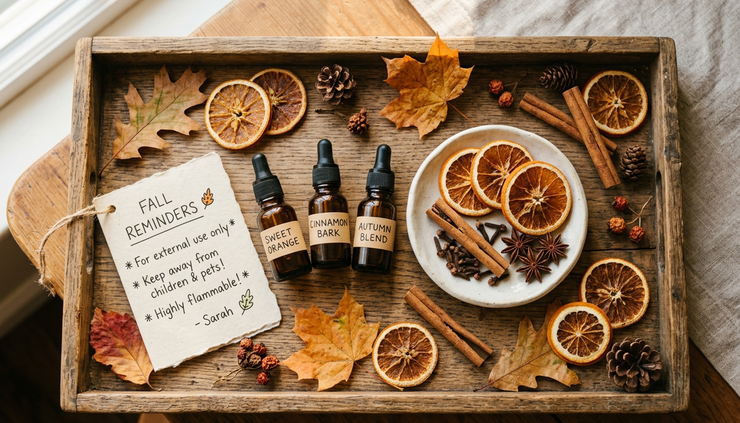
Build a simple fall aromatherapy kit
You do not need a large oil collection to make your home smell like fall. A small set of flexible oils can carry you from September through Thanksgiving and beyond.
Start with these six:
Sweet orange
Bright, cheerful, and easy to blend with spice, woods, and herbs.
Cedarwood
Warm, dry, and grounding. It makes many blends feel cozier.
Frankincense
Soft, resinous, and calm. It works well in evening blends.
Fir needle or pine
Crisp and outdoorsy. It adds that cool-air feeling.
Ginger
Warm and spicy, but usually softer than cinnamon or clove.
Lavender
Gentle and familiar. It smooths out woody and resinous notes.
If you want a stronger spice profile, add cinnamon leaf or clove bud later. Treat both as accent oils. One drop may be enough for a medium-size room, and some households may prefer to skip them completely.
For supplies, keep it simple:
A diffuser that fits the room size
Cotton pads or scent stones for passive scenting
Amber glass bottles for blends or sprays
Unscented carrier oil for topical blends, if you use them
Labels and a marker so you know what you made
Label everything with the oil names and date. Fall blends can smell similar after a while, and labels prevent guesswork.
Make fall scent feel personal
The most memorable seasonal scents often connect to real moments. Maybe fall smells like orange peels simmering near a stove, cedar closets, wet leaves, chai, woodsmoke, or the first box of holiday decorations. Aromatherapy can echo those memories without copying them exactly.
If pumpkin spice feels too sweet, use cedarwood and orange. If evergreen feels too wintry, soften fir with bergamot. If floral scents feel out of season, ground lavender with frankincense or vetiver. There is no single correct Thanksgiving-week blend or perfect October scent.
The best test is simple: leave the room for a few minutes, then walk back in. If the scent feels pleasant, clear, and easy to breathe, it is working. If it announces itself too loudly, use fewer drops, shorten the session, or add more fresh air.
Aromatherapy for fall is really about creating small signals that match the season. A citrus-wood blend for the morning. A soft resin scent for an early sunset. A touch of spice before guests arrive. These little cues help the home follow the rhythm outside.
Start with one blend this week. Keep it light, notice how the room feels, and adjust from there. The crisp season does not need a loud entrance. Sometimes a few drops of orange, cedarwood, and fir are enough to make the whole house feel ready.


Comments